Cobasna Ammunition Depot – Debunking the Myths: SI...
The Security and Intelligence Service (SIS) and the Military Intelligence Agency (AIM) of the Ministry of Defence today published the joint report “Cobasna Ammunition Depot: Debunking the Myths”, which provides a technical and security assessment of the ammunition depot located in Cobasna, in the Transnistrian region, and which is de facto under the control of the Russian Federation....
The full report is available on the official websites of the two institutions. (HERE)...
The report in English is available HERE....
The Cobasna depot has often been portrayed by some representatives of the separatist regime on the left bank of the Dniester, certain officials of the Russian Federation, as well as some domestic voices, as a potential catastrophe of regional proportions. This report presents technical storage data, ammunition characteristics, engineering calculations and terrain features that debunk these false narratives and describe the actual consequences of a potential explosion....
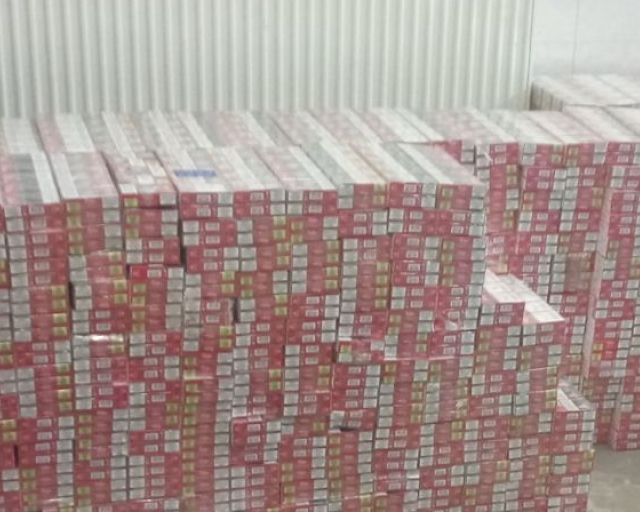
According to the assessment, of the approximately 20,000 tonnes of ammunition reported in 2006, around 14,000 tonnes are currently estimated to remain at the Cobasna storage facilities. Of this amount, approximately 2,800 tonnes represent the net explosive mass, while the remainder consists of casings, packaging, metal components and other inert materials that cannot detonate....
The analysis highlights that the ammunition is dispersed across 42 separate storage facilities and that the characteristics of the storage infrastructure, protective measures and terrain configuration significantly reduce the likelihood of the entire stock detonating simultaneously. Should an incident occur, the consequences would likely take the form of successive explosions and localized fires, with effects concentrated in the immediate vicinity of the facility, rather than a single large-scale explosion. This scenario is supported by the dynamics of explosions historically recorded at ammunition depots of a similar size, including on the territory of the Russian Federation....
Map-based explosion simulations indicate that the resulting blast wave would have a limited impact on nearby settlements. The distance between the outermost storage facility and the administrative boundary of the nearest settlement to Cobasna, the village of Andreieni, is 2 km. Since any realistic incident would originate at an individual facility located further inside the complex rather than at its outer boundary — and since the topography and existing natural and artificial barriers would confine the impact largely to uninhabited terrain — the settlement lies outside the area of major damage. Such damage would be limited to a radius of up to 2 km from the epicentre, meaning within the depot grounds, which have a perimeter of approximately 5 km....
The report also refutes scenarios suggesting that an incident at Cobasna could produce an explosion comparable in force to the use of a nuclear weapon. According to the report’s conclusions, such scenarios arise from confusing the total mass of ammunition with the net quantity of explosive material and fail to take into account the technical characteristics of ammunition storage, which make the simultaneous detonation of the entire stock unlikely....
The narrative of a “disaster” is an exaggeration intended to influence the national decision-making process: the risk of a catastrophic explosion is being used to legitimize an illegal military presence, turning an ammunition depot into an instrument for undermining national stability and security....
The SIS and AIM emphasize that the Cobasna depot represents a genuine risk requiring continuous management and monitoring, but it should not be portrayed as a threat of regional proportions or as a catastrophic scenario....